Over 8 million international tourists visit Australia every year. The country has something to offer to each and every one of them. Surfing, sunbathing, hiking, diving, wildlife watching, cruising, sightseeing – we can list the available activities for hours. Australia is suitable for all kinds of tourism, and, of course, it would be perfect for a road trip in a rented campervan.
The only thing that might bother you on the trip will be staying in touch with the world and not wasting hundreds of dollars on roaming charges. With the most magnificent scenery of Australian wildlife and plenty of attractions on your way, you will occasionally find yourself eager to share this experience on your social media or blog. Of course, you will need good internet connection for this. Access to the web will also let you stay in touch with your family and friends back home, especially if you are planning a long trip.
There are several ways, how you can get Internet data in Australia, but the easiest and the most obvious one is to get a local SIM card. When you first touch the ground of Australia, you’ll probably start looking for the best network service for your phone. We did a deep research and found the best options for you to stay in touch with the world while being on a road trip in Australia.
What Are Your Data Options in Australia

There are four main options to stay connected on a road trip:
- Roaming on your home SIM card
- Wi-Fi on board of a campervan
- Free Wi-Fi hotspots
- Local SIM card
Roaming on Your Home SIM Card
This might be an acceptable option for a short trip. For long journeys, however, the cost of roaming will be exorbitant. Even if you just spend $5 a day, it will cost you $150 per month. Also, data and call packages are usually pretty small and overuse will cost you a fortune. While the terms of using roaming connection are quite strict.
Wifi Connection on Your Campervan
Some campervan hire companies, such as Maui, Britz, or Mighty, offer inclusive packages with in-trip tablets and GPS. Usually, it includes 1 GB of Wi-Fi data on Telstra network, which is good if you are going deep into the wild or rural areas. The hotspot will be situated in your campervan and you can easily access it with a password from your phone or tablet.
Another option is to buy your own on-board Wi-Fi Box and bring it with you on a trip. But the device is quite expensive and will only pay off if you travel often. Also, it won’t work if there is a signal dead spot.
Free Wi-Fi Hotspots
Always a great option for tourists – Wi-Fi hotspots, which can be found in multiple public areas, hostels, campgrounds, cafes, libraries, etc. But the thing is, this free connection is usually slow and can’t be used for Skype or Viber calls. Also, some cafes won’t let you use their Wi-Fi, unless you order something. Of course, the price of a cup of coffee is not that high, but will you be comfortable having to stop for coffee every time you need to surf the Internet? It’s up to you.
Cellphone Network Providers in Australia
If we reject the previous options, the only way to stay connected on a road trip in Australia will be to purchase a SIM card from a local network provider. We compared the packages from all providers and picked the best suitable for tourists, who come to Australia for a short period of time (more than 14 weeks, but less than 6 months).
Most tourists have similar demands for mobile connection abroad: they need to use Internet data, make local or international calls, and sometimes, send text messages. So, we tried to concentrate mostly on these three points.
Three major mobile providers in Australia are:
 Telstra
 Vodafone
 Optus
Optus
Smaller companies just rent the towers and the infrastructure from those three leaders and resell their services. On the other hand, their prices can be lower, than those from big providers are, and you can sometimes get really great deals. These small providers are (by the host network):
Telstra:
- ALDI mobile
- Better Life Mobile
- Belong Mobile
- Boost Mobile
- CMOBILE/BLUE PLANS
- Lyca mobile
- TeleChoice
- Think Mobile
- Woolworths Mobile
Vodafone:
- AAPT
- ACN
- LTE
- CMOBILE/RED PLANS
- Global Gossip
- Gotalk
- Hello Mobile
- InnoTel
- LTE
- KISA Phone
- Kiss Mobile
- Kogan Mobile
- Lebara
- Revolution Telecom
- Reward Mobile
- Think Mobile
- TPG
Optus:
- Amaysim
- Bendigo Telco
- Catch Connect
- ClubTelco
- Coles Mobile
- Commander
- Dodo Services
- Exetel
- Fibre2air
- IiNet
- Internode
- iPrimus
- Jeenee Mobile
- Live Connected
- LoopOptus
- MeU mobile
- Moose Mobile
- ONEmobile
- OVO Mobile
- Southern Phone
- SpinTel
- Startel
- Truphone
- Ugly BiLL
- Vaya Mobile
- Virgin Mobile Australia
- Yomojo
Best Options for Calls, Texts, and Internet Data
The Best Plan for Phone Calls in Australia
With this Pay As You Go (PAYG) option, you don’t have to buy data, call, or message packages in advance. You pay while you use the data. It would be perfect, when you don’t need a lot of Internet data and don’t plan to call a lot, but you still want to stay connected, receive calls and messages.
- Telstra: $20 per 45 days or $30 per 186 days/10c per 1 Mb/30c per min/30c per SMS
- Vodafone: $30 per 180 days/4c per 1 Mb/20c per min/20c per SMS
- Optus: $30 per 186 days/7c per 1 Mb/25c per min/25c per SMS
The Best Voice and Data Phone Plans in Australia
With this option, you buy a package of data, calls and texts. The price depends on the amount of data included and the length of use. When the package expires or you run out of data, you just recharge the package. And if you need some additional services, you can always buy add-ons. These packages are:
Telstra:
- 2 Gb for 7 days/Price: $10
- 20 Gb for 28 days/Price: $30
- 35 Gb for 35 days/Price: $40
- 43 Gb for 42 days/Price: $50
- 60 Gb for 6 months/Price: $150
All of these plans include unlimited calls to standard Australian numbers and unlimited standard international calls to 20 different destinations: Brazil, Canada, China, Germany, Hong Kong, India, Indonesia, Japan, Malaysia, Nepal, New Zealand, Pakistan, Philippines, Singapore, South Africa, South Korea, Thailand, UK, USA and Vietnam.
Vodafone:
- 25 Gb/Unlimited national calls and texts/Price:$30 per 28 days
- 40 Gb/Unlimited national calls and texts/500 international minutes in Zone 1 and 100 minutes in zone 2/Price:$40 per 35 days
- 55 Gb/ Unlimited national calls and texts/1000 international minutes in Zone 1 and 150 minutes in zone 2/Price:$50 per 35 days
Zone 1 includes these countries: Canada, China, Germany, Guam, Hong Kong, Iceland, India, Ireland, Japan, Malaysia, Mexico, New Zealand, Norway, Puerto Rico, Romania, Singapore, South Korea, Sweden, United Kingdom and the United States of America
Zone 2 includes these countries:
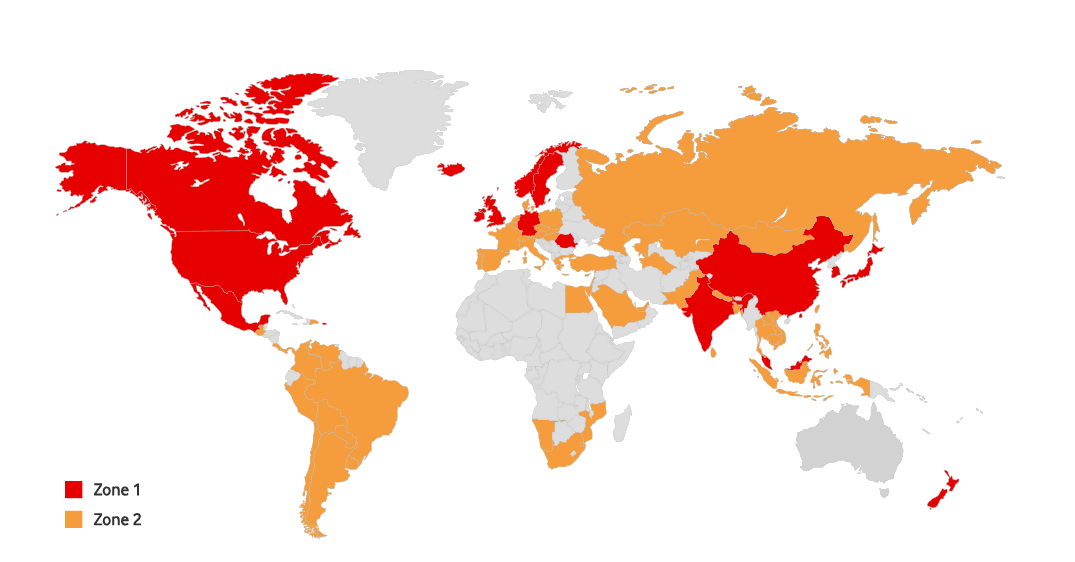
https://www.vodafone.com.au/plans/international-calls/state/prepaid
Optus:
- 5 Gb/ 100 min national calls and unlimited national texts/Price: $10 per 5 days
- 12 Gb/ 200 min national calls and unlimited national texts/Price: $20 per 10 days
- 35 Gb/ Unlimited national calls and texts/Unlimited standard international calls to 15 countries/Price: $30 per 28 days
- 45 Gb/ Unlimited national calls and texts/Unlimited standard international calls to 15 countries/Price: $40 per 28 days
- 55 Gb/ Unlimited national calls and texts/Unlimited standard international calls to 15 countries/Price: $50 per 28 days
- 65 Gb/ Unlimited national calls and texts/Unlimited standard international calls to 15 countries/Price: $60 per 28 days
- 70 Gb/ Unlimited national calls and texts/Unlimited standard international calls to 15 countries/Price: $70 per 28 days
- 75 Gb/ Unlimited national calls and texts/Unlimited standard international calls to 15 countries/Price: $80 per 28 days
- 85 Gb/ Unlimited national calls and texts/Unlimited standard international calls to 15 countries/Price: $100 per 28 days
Unlimited international calls to these countries are included: Canada, mainland China, France, Germany, Hong Kong, India, Ireland, Japan, Malaysia, New Zealand, Singapore, Sweden, the United Kingdom, the United States of America.
Making Overseas Calls
All the main Australian mobile providers offer packages with international calls included. However, the number of minutes and the number of destinations are quite limited. Of course, if you have enough Internet data on your package, you can always use Skype, Viber, WhatsApp, or Facebook Messenger for international calls and not spend any extra money. But if you need to contact someone abroad via traditional phone call, and the country of destination is not on the list, you can always buy some additional international calls add-ons to your package.
With Vodafone, you’ll have to pay $5 per 240 minutes of talking to zone 1 or $10 per 60 minutes of talking to zone 2:
https://www.vodafone.com.au/plans/international-calls/state/prepaid
With Optus, it will cost you $5 per 300 minutes of talking to these 50 destinations:
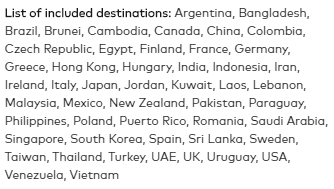
https://www.optus.com.au/shop/mobile/prepaid/plans?SID=con:premob:2ndNav:premob:othr:Prepaid:pos2
Network Coverage of the Main Providers
Telstra
The company covers almost 2.5 million square miles of Australian territory, which includes 60% of the country’s bush. Telstra has the best coverage in Australia, approximately twice as large as the other providers do. On the other hand, that is only one-third of the total landmass of Australia. So if you are planning to go far off the main tourist routes, don’t expect the connection to be perfect.
Optus
Optus is the second-best mobile provider by network coverage in Australia. You won’t have any connection troubles in cities and towns. In rural areas, however, there are still a lot of dead spots.
Vodafone
Vodafone has the smallest coverage of all three companies. So, if you are planning to travel off the popular travel routes, you might consider using another phone company’s service.
You can always check the coverage maps of three main Australian providers, to see if they offer service in some particular areas, which you have on your itinerary:
How Much Do the SIM Cards Cost?
With Telstra, you get a free SIM card and then charge it with the amount of money you need to order a data package.
If you buy a SIM card from Optus, you choose the data package at the same moment. Thus, the SIM card will cost you from $10 to $180, depending on the package you choose. And you don’t have to worry about it for at least 5 days (if you choose the smallest package).
The same rules work for Vodafone: when you order a data package, you get a SIM card for free.
The Wrap Up
If you are planning to rent an RV and explore Australia on four wheels, avoiding hotels and big resorts, it doesn’t mean you have to fall out of your life, get disconnected from your social media, your family and friends, or spend hundreds of dollars on roaming charges.
Of course, some campervan hire companies equip their vehicles with Wi-Fi bundles. And you can use free Wi-Fi hotspots. However, if you are looking for more multipurpose option, think about buying a local SIM card. This way, you will be able to not only surf the Internet, but also call local and international numbers, send messages, and receive calls, which is also very important on a trip.
There are three major providers in Australia:
- Telstra
- Vodafone
- Optus
All the smaller companies are resellers and use the leaders’ infrastructure. Of course, sometimes they might offer cheaper prices and better deals, keep that in mind.
Telstra has the best coverage in the country, so it would be a better option if you are planning to go off the tourist routes and deep into the rural area. On the other hand, it has the highest fares of all. Optus and Vodafone offer cheaper options, but the territory of their coverage is twice as small as the one of Telstra. The best decision would be to check the coverage in the area of your travel, when you are sure about your itinerary.
Stay connected, and we are sure, you will bring the best memories about Australia back home!