Campervan Hire Queenstown
Compare motorhome rental companies available in Queenstown, New Zealand
Compare motorhome rental companies available in Queenstown, New Zealand
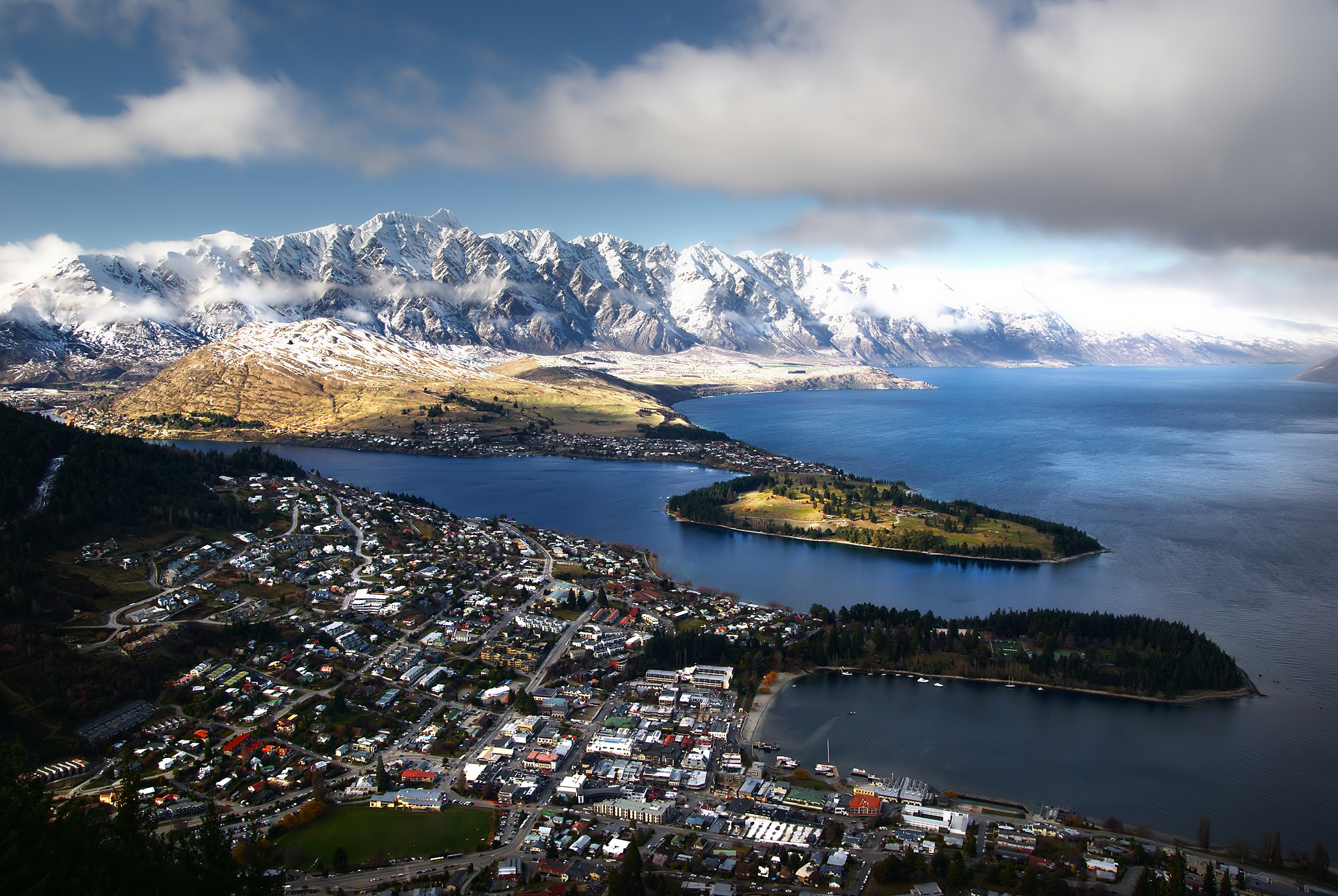
Queenstown is New Zealand's adventure capital — a compact mountain town on the shores of Lake Wakatipu, surrounded by the Remarkables mountain range and framed by some of the most dramatic scenery in the Southern Hemisphere. Campervan hire from Queenstown gives you immediate access to Fiordland's fjords, Central Otago's wine country, the Milford Sound highway, and the Catlins' wild southern coastline. For most travellers, Queenstown is either the end point of a South Island circuit from Christchurch or the starting point for a journey deeper into the South Island's most remote landscapes.
Hit The Road has independently reviewed all 12 campervan hire companies operating out of Queenstown. Daily rates run from around $70–$95 for budget two-berth campervans to $300–$380 for fully self-contained luxury motorhomes. Queenstown has a smaller fleet than Christchurch — fewer operators and fewer vehicles — which makes early booking especially important here. The major operators represented include Britz, Maui, Mighty Campers, and Apollo, alongside specialist operators suited to Queenstown's adventure-focused market.
Queenstown's campervan depots are located in the town area and near Queenstown Airport, within easy reach of the main highways heading west toward Fiordland, north toward Wanaka and Haast Pass, and east toward the Central Otago wine trail. One-way hire is natural here — Queenstown is a popular arrival point for travellers flying in, with Christchurch being the most common one-way origin. Hit The Road has independently reviewed every campervan and motorhome rental company in Queenstown so you can compare with confidence.

12 campervan hire companies available in Queenstown
Last Updated: 7/ 31/19

Last Updated: 10/24/19

New Zealand Frontiers is a premium, family-operated motorhome rental company based in Auckland with over 30 years of experience in New Zealand travel. Owner and

Last Updated: 9/28/19

Last Updated: 10/16/19

Maui is New Zealand's premium motorhome hire brand under Tourism Holdings Limited (THL) — offering five fully self-contained models from 2 to 6 berth, all under

Last Updated: 9/18/19

Mighty Campers New Zealand is the budget arm of Tourism Holdings Limited (THL) — the same group that owns Britz and Maui. Operating three depots in Auckland (Mā

Apollo Campervans is one of New Zealand's most recognised and trusted campervan hire operators, with a modern fleet covering the full range from compact hitop c

Britz is a New Zealand-owned campervan hire company offering a modern fleet of motorhomes and campervans for exploring both islands. With depots in Auckland, Ch

Jucy is a New Zealand-founded campervan hire brand operating since 2001 with a bold green-and-black livery you'll spot everywhere on both islands. Three depots

Wicked Campers NZ operates under the multi-national campervan hire, Wicked Campers, which operates all over the world— USA, Canada, Europe, UK, Australia, South
Click a marker to see which company operates from that location
Most campervan rentals in Queenstown cost between $70 and $380 per day, depending on vehicle type, season, and trip length. Here's a practical breakdown of what to expect across the main categories.
Budget campervans are typically 2-berth hi-top or station wagon-style sleepers with a basic kitchen, fold-out bed, and battery — no onboard toilet or shower. For Queenstown's climate and altitude, insulation quality matters more than in warmer parts of New Zealand — nights near Lake Wakatipu are cool year-round. JUCY and Spaceships have entry-level options from Queenstown. Rates fall further in the shoulder and winter months and on longer bookings.
Mid-range vehicles are typically 2–4 berth hi-tops or cab-over campervans with a more complete kitchen, better insulation, and good storage. This is the most popular bracket for Queenstown-based South Island road trips — the extra quality makes a significant difference when you're camping in Fiordland or the Mackenzie Basin. Britz, Mighty Campers, and Apollo all offer well-regarded options from Queenstown.
Fully self-contained 4–6 berth motorhomes with onboard ensuite, full kitchen, and climate control. Maui operates at the top end from Queenstown. Full self-containment is particularly valuable on a Fiordland circuit — freedom camping at remote waterside locations is one of the South Island's great experiences, and it's only accessible in self-contained certified vehicles.
Several factors will move your daily rate up or down:
Queenstown is positioned at the heart of the South Island's finest scenery — every route from here leads to something extraordinary. These are the routes worth knowing.
The Milford Sound road from Te Anau is one of New Zealand's great drives — 119km of progressively more dramatic alpine scenery through the Eglinton Valley, Mirror Lakes, and the Avenue of the Disappearing Mountain before emerging at the fjord. Milford Sound itself — Piopiotahi — is one of the most spectacular places on earth: sheer granite walls rising from dark water, Mitre Peak (1,692m) reflected in the silence, and Stirling and Lady Bowen Falls tumbling into the sound. Spend the night in Te Anau and drive in early to beat the crowds. A morning cruise on the sound is essential — book well ahead. Book the cruise at least 2–3 weeks ahead in summer.
Central Otago produces some of the world's finest pinot noir — a cool-climate wine region on dramatic schist rock terrain, with the Kawarau Gorge, the Cromwell basin, and the historic stone buildings of Clyde and Alexandra as its backdrop. Drive north from Queenstown through the Kawarau Gorge to Cromwell, then explore the cellar doors of Bannockburn, Bendigo, and the Gibbston Valley on the return. Autumn (March–May) is the best time — harvest season, golden vines, and the most concentrated food and wine culture on the South Island. Arrowtown, 20 minutes from Queenstown, is the region's most charming historic town and excellent for an overnight stop.
Drive north over the Crown Range Road — the highest sealed road in New Zealand (1,121m) — and descend into the Wanaka basin. Wanaka is a smaller, quieter alternative to Queenstown with excellent cafés, good hiking, and the famous lakeside tree photo spot. Continue north through the Makarora Valley into the Haast Pass — a UNESCO World Heritage corridor of ancient rainforest and dramatic river gorges. The Blue Pools walk (45 minutes return) is one of the great short walks on the South Island. Continue to the West Coast or return to Queenstown via the same route for a different light on the return.
The Catlins is one of New Zealand's best-kept secrets — a wild, forested, and largely tourist-free coastline stretching from Balclutha to Invercargill in the far south of the South Island. Highlights include Nugget Point lighthouse (one of the finest viewpoints in New Zealand), Purakaunui Falls (the most photographed waterfall in the South), Cathedral Caves (accessible only at low tide), and Slope Point — the South Island's southernmost tip. Sea lions, elephant seals, yellow-eyed penguins, and Hector's dolphins are all regularly encountered along this coast. The roads are mostly sealed but narrow and slow — allow three to four days to do it properly without rushing.
Te Anau is the gateway to Fiordland National Park — New Zealand's largest national park, covering 1.2 million hectares of ancient rainforest, towering fjords, and remote wilderness. Beyond the Milford Sound road, Fiordland offers the Kepler Track (one of the New Zealand Great Walks), glow worm caves at Te Anau (underground caves with glowing larvae that are genuinely extraordinary), and boat cruises on Doubtful Sound (even more remote than Milford, requiring a boat trip across Lake Manapouri to access). Spend at least two nights in Te Anau to get beyond just the Milford Sound day trip.
The classic South Island one-way run from Queenstown to Christchurch via Aoraki/Mount Cook is one of New Zealand's finest drives. Head north through the Lindis Pass into the Mackenzie Basin — wide tussock plains flanked by mountains — and detour to Lake Tekapo (one of the world's best dark-sky reserves) before arriving at Mount Cook Village. The Hooker Valley Track gives views of the Hooker Glacier and Aoraki from its terminus. Continue north through Geraldine and the foothills to Christchurch. Allow four to seven days to do this properly with time at Mount Cook and Tekapo.
Queenstown's surrounding terrain — Fiordland, the Crown Range, the West Coast — rewards vehicles that handle well and are well-insulated. Here's how to choose.
A compact 2-berth campervan is the most practical choice for Queenstown. Easier to manoeuvre on the Milford road, manageable on the Crown Range, and more suitable for the Catlins' narrower coastal roads than a large motorhome. JUCY, Spaceships, Britz, and Apollo all have good 2-berth options from Queenstown. Insulation is important — Queenstown nights are cool, and temperatures drop quickly at altitude and near the fjords.
For three or four travellers, a hi-top or cab-over 4-berth gives the right balance of space and driveability on South Island routes. Most 4-berth vehicles include a more complete kitchen setup and better storage — useful on longer Fiordland circuits. Britz, Mighty Campers, and Apollo offer well-regarded 4-berth options from Queenstown.
A fully self-contained 6-berth motorhome gives families the space and facilities for a comfortable South Island circuit. Note that large motorhomes face restrictions on the Milford Sound road during peak summer periods, and the Homer Tunnel is tight for very large vehicles — check with your operator before booking. Maui operates at the top end from Queenstown.
The South Island's main tourist routes from Queenstown — Milford Sound, Wanaka, the Crown Range, and the Catlins — are all sealed. A 4WD is needed for Skippers Canyon (a dramatic historic gold-mining route near Queenstown) and certain DOC back-country tracks. Skippers Canyon requires both a 4WD-approved vehicle and written operator approval — confirm before booking.
Station wagon-style sleeper campervans are the cheapest entry point but are often under-insulated for Queenstown's cooler climate, particularly in spring and autumn. For the South Island's altitude, weather variability, and overnight temperatures, a basic hi-top campervan with good insulation is a much better investment for multi-week trips.
Queenstown's campervan hire depots are located in the town area and in the light industrial zone near Queenstown Airport — within 5–15 minutes of the terminal. Britz, Maui, Apollo, and Mighty Campers all operate from this area. A taxi or Uber from the airport is the most practical transfer. Your hire company will confirm the exact depot address at booking — pick-up times are typically 8am–3pm.
You do not need a special heavy vehicle licence to drive a campervan or motorhome in New Zealand — a standard car driving licence is all that's required, even for the largest 6-berth motorhomes. Your licence must be current and in English, or accompanied by an official translation. Visitors from most countries can drive on their home licence for up to 12 months. New Zealand drives on the left. The Crown Range Road and the Milford Sound approach road are narrow, winding, and demand full attention — allow extra adjustment time before tackling mountain roads.
The standard minimum age across most companies is 21. Some operators will hire to drivers aged 18 and over who hold a full unrestricted licence. Drivers aged 21–24 should expect an additional young driver excess on top of the standard insurance liability.
Queenstown has New Zealand's smallest major-city campervan fleet — 12 companies means vehicles sell out fast. For December–February peak summer travel, book 4–6 months in advance. For the ski season (June–September), book 2–4 months ahead. For shoulder season in March–May and October–November, 4–8 weeks is generally sufficient. The most popular campgrounds near Queenstown and in Te Anau book out even faster than the campervans — reserve campground sites as soon as your dates are confirmed.
New Zealand drives on the left. The roads around Queenstown include some of the South Island's most demanding driving conditions — the Crown Range Road (highest sealed road in New Zealand), the Kawarau Gorge (narrow and winding), the Milford Sound highway (one-lane sections, the Homer Tunnel, and avalanche risk in winter), and the Catlins' coastal back-roads. Take all mountain roads slowly. One-lane bridges are common — give way to traffic on your right. The Milford road requires timed convoys in summer and can close in winter with snow and ice — always check NZTA journey conditions before departing. Fill up with fuel in Queenstown and Te Anau before the Milford drive; there is no fuel at Milford Sound.
New Zealand has an extensive network of holiday parks, DOC campgrounds, and freedom camping areas. The Queenstown Lakes District is one of the strictest councils in New Zealand for freedom camping — freedom camping is not permitted within the Queenstown Lakes district boundary without a self-contained vehicle certificate. Outside the district, freedom camping options open up in the Fiordland approaches, the Catlins, and the Mackenzie Basin. The Campermate and WikiCamps NZ apps are essential tools for finding legal freedom camping spots in the Queenstown region and beyond.
Campervan hire in Queenstown ranges from around $70 per day for a basic budget campervan up to $380 per day or more for a fully self-contained luxury motorhome. The price depends on vehicle type, fleet age, time of year, and rental length. December–February (summer) and June–September (ski season) are the busiest periods. Shoulder season (March–May, October–November) offers the best combination of good weather and competitive prices.
Queenstown's campervan depots are near the airport and in the light industrial area close to Queenstown town — within 5–15 minutes of the terminal. Britz, Maui, Apollo, and Mighty Campers all operate from this area. A taxi or Uber from the airport is the most practical transfer. Your hire company will confirm the exact address at booking.
No. A standard car driving licence is all you need to drive any campervan or motorhome in New Zealand, including the largest 6-berth models. Your licence must be current and in English, or accompanied by an official translation. Visitors can drive on their home licence for up to 12 months in New Zealand.
The standard minimum age is 21 across most campervan hire companies in Queenstown. Some operators will hire to drivers aged 18 and over who hold a full unrestricted licence. Drivers between 21 and 24 should expect an additional young driver excess on top of the standard insurance bond.
Yes — one-way hire from Queenstown is available. The most popular route is Queenstown to Christchurch (via Aoraki/Mount Cook and the Mackenzie Basin). Queenstown to Auckland (via Christchurch and the Interislander ferry) is a popular full-country circuit end point. One-way fees vary by operator, typically $150–$500 within New Zealand, and ferry crossings are booked separately through KiwiRail or Bluebridge.
Most Queenstown campervan rentals include unlimited kilometres, basic kitchen equipment (gas cooktop, fridge, pots and pans, cutlery), bedding and linen, a battery system, and roadside assistance cover. Insurance with a standard excess is typically included in the base rate, with the option to purchase a reduced excess at pick-up. What is generally not included: airport transfers, additional driver fees, fuel, campsite fees, and optional extras like GPS, camp chairs, or portable Wi-Fi.
March–May (autumn) and October–November (spring) are the best times for most Queenstown-based road trips — good weather, lower prices than peak summer, and fewer crowds. December–February offers the longest days and best conditions for Milford Sound and the Catlins, but it's the most expensive and crowded period. Winter (June–August) is spectacular for skiing at Coronet Peak and The Remarkables but many campers find the nights too cold without a fully heated vehicle.
Yes — this is one of the most popular campervan trips in New Zealand. Drive from Queenstown to Te Anau (2 hours), spend the night in Te Anau, then drive to Milford Sound (1.5 hours) in the morning before the crowds arrive. The Milford road passes through stunning scenery, including the Homer Tunnel (carved through solid rock). Large motorhomes face restrictions on peak summer days — confirm with your operator. Book the Milford Sound cruise at least 2–3 weeks ahead in summer.
Freedom camping is tightly restricted within the Queenstown Lakes District — only self-contained certified vehicles can freedom camp within the district, and only in designated areas. Fines for non-compliance are significant. Outside the district, freedom camping options open up quickly in the Fiordland approaches (Eglinton Valley, Te Anau area) and toward the Catlins. Always check with Campermate or WikiCamps NZ for current legal freedom camping spots before parking overnight.
Queenstown has a smaller campervan fleet than Christchurch — book earlier than you would elsewhere. For December–February peak summer travel, book 4–6 months ahead. For ski season (June–September), book 2–4 months ahead. For shoulder season (March–May, October–November), 4–8 weeks is generally sufficient. Also book your campground sites early — Te Anau holiday parks fill fast in summer and well-positioned Queenstown campgrounds are similarly competitive.
Yes — for peak season travel, absolutely. The most popular holiday parks in Queenstown and Te Anau fill weeks ahead in December–January. DOC campgrounds on the Milford road and in Fiordland should be booked through the DOC website. Freedom camping areas are generally first-come, first-served, but the Queenstown Lakes District is strictly enforced — don't rely on finding an unmarked spot. Use Campermate or WikiCamps NZ to plan ahead.


