Campervan Hire Auckland
Compare motorhome rental companies available in Auckland, New Zealand
Compare motorhome rental companies available in Auckland, New Zealand
Auckland — the City of Sails — is New Zealand's largest city and the most popular starting point for a campervan road trip. Positioned on a narrow isthmus between two harbours in the upper North Island, it's within easy reach of everything that makes the North Island extraordinary: Northland's Bay of Islands is 3.5 hours north; the Coromandel Peninsula is 2.5 hours east; Rotorua's geothermal wonderland is 3 hours south; and Tongariro National Park — with its volcanic plateau and iconic Alpine Crossing — is 5 hours away. The full North Island circuit, continuing south to Wellington for the Interislander ferry crossing to the South Island, is one of New Zealand's great self-drive adventures.
Hit The Road has independently reviewed all 39 campervan hire companies operating out of Auckland — more than any other New Zealand city. Daily rates run from around $70–$95 for budget two-berth campervans to $300–$380 for fully self-contained luxury motorhomes. The full range of operators is represented: budget-focused brands like JUCY, Wicked Campers, and Spaceships sit at the entry level; Britz, Mighty Campers, and Maui cover the mid-range and premium markets; and specialist operators offer off-road and extended-hire options suited to New Zealand's varied terrain.
Auckland campervan depots are clustered in the southern suburbs — Penrose, Māngere, and Mt Wellington — within 15–25 minutes of Auckland Airport, with straightforward motorway access heading north or south. One-way hire is widely available from Auckland: south to Christchurch via the Interislander ferry is the most popular route, and one-way north-to-south full-country circuits finishing in Queenstown are common for longer trips. For travellers doing a shorter North Island loop, returning to Auckland via Wellington gives you the ferry option without committing to the South Island. Hit The Road has independently reviewed every major campervan and motorhome rental company in Auckland so you can compare with confidence.

39 campervan hire companies available in Auckland

Wilderness is a New Zealand-owned, family-run motorhome hire company founded in 2004 and headquartered in Auckland. A certified B Corp and Qualmark Gold operato

Mad Campers is a Kiwi-owned campervan hire company with depots in Auckland and Christchurch, offering a diverse fleet of innovative, self-contained campervans b

Affordable Motor Home Rentals is a Christchurch-based, family-owned motorhome hire company that has been in business since 1996. Led by Lynda and her team, they

Epic Campers is a small, independent campervan hire company founded in Auckland in 2015 by Andy and Cindy. They operate a fleet of three self-contained 2-person

Sunrise Holidays is a premium campervan hire concierge based in Auckland and Christchurch, New Zealand. Rather than running a large impersonal fleet, they offer
Last Updated: 7/ 31/19

Last Updated: 10/24/19

Last Updated: 10/18/19

New Zealand Frontiers is a premium, family-operated motorhome rental company based in Auckland with over 30 years of experience in New Zealand travel. Owner and

Pacific Horizon has been designing and building motorhomes specifically for New Zealand since 1986. Family-owned and Wellington-based, every vehicle in their fl

Last Updated: 9/28/19

Last Updated: 8/31/19

Last Updated: 10/16/19

Maui is New Zealand's premium motorhome hire brand under Tourism Holdings Limited (THL) — offering five fully self-contained models from 2 to 6 berth, all under

Last Updated: 9/18/19

Spaceships Rentals New Zealand offers compact, car-like campervans from two depots — Auckland and Christchurch. Their Toyota Estima-based fleet includes the 2-b

Mighty Campers New Zealand is the budget arm of Tourism Holdings Limited (THL) — the same group that owns Britz and Maui. Operating three depots in Auckland (Mā

Apollo Campervans is one of New Zealand's most recognised and trusted campervan hire operators, with a modern fleet covering the full range from compact hitop c

Britz is a New Zealand-owned campervan hire company offering a modern fleet of motorhomes and campervans for exploring both islands. With depots in Auckland, Ch

Escape Rentals is one of New Zealand's favourite budget campervan hire companies, operating for over 20 years with more than 40,000 hires. This Kiwi family-owne

McRent is one of the world's largest motorhome rental networks, part of the Erwin Hymer Group (Dethleffs/Sunlight). The New Zealand operation hires semi-integra
Last Updated: 10/14/19
Campervan hire in Auckland, New Zealand.

Last updated: 7/13/19

Family-owned campervan hire based in Auckland, New Zealand. Chilli Rentals offers a self-contained fleet of 2 to 3 berth campervans — including Ford Transit, To

Freedom Campers is a New Zealand-owned campervan hire company that has been part of the Tui Campers family since 2019. Headquartered in Christchurch, the compan

Last Updated: 9/18/19

Last Updated: 9/20/19

Last updated: 7/24/19

Kiwi Campers is a New Zealand-owned campervan hire company established in 2005, operating a fleet of over 150 vehicles from depots in Auckland and Christchurch.

Last updated: 7/24/19

Quirky Campers NZ is a curated marketplace connecting travellers with privately owned, handcrafted campervans for hire across New Zealand. Founded in 2019 by Le

Road Runner Rentals is a family-owned campervan and motorhome hire company operating from Auckland and Christchurch since 2006. The fleet ranges from budget cam
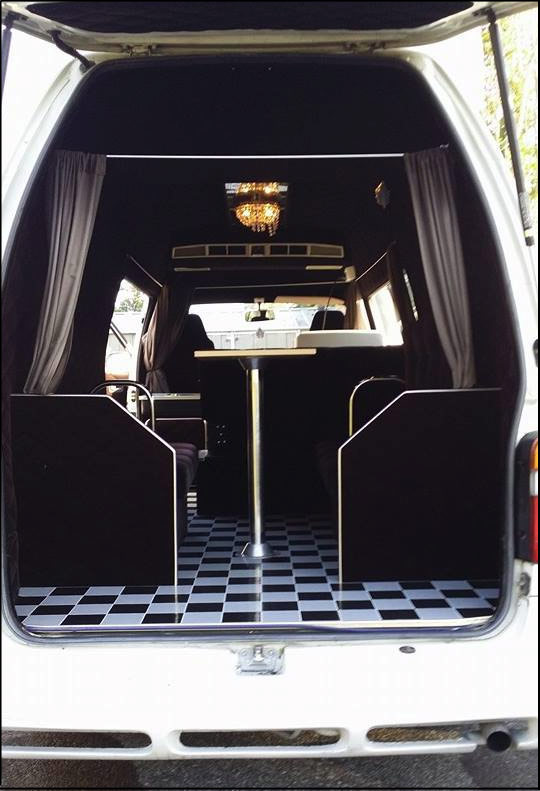
Sweet As Campers is a budget-friendly campervan hire company based at Red Beach on Auckland's Hibiscus Coast. With a fleet spanning 2 to 6 berth campervans and
Since 1983, Tui Campers has been a proudly family-owned Kiwi company helping travellers explore New Zealand with the freedom, comfort, and flexibility that only
Last Updated: 10/6/19

Jucy is a New Zealand-founded campervan hire brand operating since 2001 with a bold green-and-black livery you'll spot everywhere on both islands. Three depots

Wicked Campers NZ operates under the multi-national campervan hire, Wicked Campers, which operates all over the world— USA, Canada, Europe, UK, Australia, South
Of dubious use to someone planning a decent self drive campervan road trip, this company does supply some campervans for rental. Their supply is limited and the
Click a marker to see which company operates from that location
Most campervan rentals in Auckland cost between $70 and $380 per day, depending on vehicle type, season, and trip length. Here's a practical breakdown of what to expect across the main categories.
Budget campervans are typically 2-berth hi-top or station wagon-style sleepers with a basic kitchen, fold-out bed, and battery — no onboard toilet or shower. In New Zealand's generally mild climate, these work well for most North Island routes, though insulation quality matters for the Central Plateau in winter and the cooler months at altitude. JUCY, Wicked Campers, and Spaceships all have entry-level options from Auckland. Rates fall further in winter (June–August) and on longer bookings.
Mid-range vehicles are typically 2–4 berth hi-tops or cab-over campervans with a more complete kitchen, better insulation, and good storage. This is the most popular bracket for North Island road trips — the extra quality makes a meaningful difference on a multi-week circuit where you're cooking every meal and spending rainy evenings inside. Britz, Mighty Campers, and Apollo all offer well-regarded options throughout this range from Auckland.
Fully self-contained 4–6 berth motorhomes with onboard ensuite, full kitchen, and climate control. Maui and Star RV are the benchmark at the top end of the Auckland market. Full self-containment opens up New Zealand's extensive network of freedom camping spots — self-contained certified vehicles can park in locations that others can't, significantly expanding your options across both islands.
Several factors will move your daily rate up or down:
Auckland sits at the top of the North Island's routable network — every direction leads somewhere worth going. These are the routes that matter.
Drive north from Auckland on SH1 through the Kauri Coast to the Bay of Islands — 144 islands, warm turquoise water, and one of New Zealand's most historic regions. Paihia is the main base; take the ferry to Russell (the country's first European settlement), cruise through the bay, or drive to Cape Reinga at the very tip of the North Island where the Tasman Sea meets the Pacific Ocean. On the way back, detour west to the Waipoua Forest for the ancient kauri trees — Tāne Mahuta, New Zealand's largest kauri, is a genuinely moving encounter. Allow at least 4 days; 7 days gives you a relaxed pace and time to explore properly.
The Coromandel Peninsula is Auckland's backyard escape — a forested mountain spine flanked by excellent beaches on both coasts. The highlights: Whitianga and the Mercury Bay area on the east coast; Hot Water Beach (dig your own hot pool in the sand at low tide — arrive early); Cathedral Cove (a spectacular sea arch accessible by water taxi or a 45-minute walk); and Coromandel Town on the west coast, the most charming small town on the peninsula. The road over the top of the peninsula is spectacular but slow — allow 2 hours from coast to coast on the mountain road. Most of the main roads are sealed but narrow; a compact campervan is easier than a large motorhome.
Rotorua sits on one of the most geothermally active zones on earth — the whole city smells of sulphur, mud pools bubble alongside the road, and steam vents erupt from footpaths. Te Puia and the Whakarewarewa thermal village are the main cultural and geothermal attractions; the Redwood Forest has excellent mountain biking and walking tracks; and Wai-O-Tapu thermal wonderland has the most photogenic geothermal features in the country. Continue south to Taupō and the lake — New Zealand's largest, sitting in the caldera of a supervolcano — and then into Tongariro National Park for one of the world's great day walks.
Tongariro National Park contains three active volcanoes — Ruapehu, Ngāuruhoe, and Tongariro — and one of the world's finest day hikes: the Tongariro Alpine Crossing (19.4km, 7–8 hours). The crossing traverses a dramatic volcanic landscape of crater lakes, lava flows, and emerald lakes that featured as Mordor in the Lord of the Rings films. Whakapapa Village is the main base for the park. In winter, Mt Ruapehu's Whakapapa and Turoa ski fields operate on the volcano's slopes. Book the crossing shuttle bus and Tongariro campground well in advance in summer.
The full North Island drive from Auckland to Wellington along SH1 is a proper road trip in itself: through the Waikato farming heartland, Hamilton, and Taumarunui; past the Tongariro volcanoes; through the Tararua Ranges and the Manawatū Gorge; and into Wellington, New Zealand's compact and culturally vibrant capital. Allow 7–10 days to take in Rotorua, Tongariro, and the Hawke's Bay wine region along the way. Wellington is the departure point for the Interislander ferry to Picton and the South Island — making it the natural end point for a one-way Auckland to Christchurch campervan hire.
The East Cape is one of New Zealand's least-visited but most spectacular coastal drives — a loop from Auckland through the Bay of Plenty, around the remote East Cape to Gisborne, and back via Hawke's Bay. The Cape Eastland lighthouse walk, the deserted beaches of the East Coast, Mahia Peninsula, and the wine country around Napier and Hastings are the highlights. This route is entirely sealed but long and often slow — the coastal roads are winding and beautiful. Most campervans handle the East Cape circuit without any issue. Fewer crowds, fewer tourist facilities, and more genuine New Zealand than almost any other North Island route.
New Zealand's roads — particularly on the Coromandel, East Cape, and in Northland — favour smaller, nimbler vehicles. That said, the main highways are well-suited to larger motorhomes.
A compact 2-berth campervan is the most versatile choice for New Zealand travel. Easy to park at busy campgrounds in summer, manageable on the Coromandel's narrow roads, and practical at Northland's smaller campgrounds. JUCY, Spaceships, Britz, and Apollo all have strong 2-berth options from Auckland. Look for a model with good insulation — New Zealand's nights can be cold even in summer at altitude.
For three or four travellers, a hi-top or cab-over 4-berth campervan is the sweet spot. New Zealand's popular campgrounds fill fast in December–January — a mid-range 4-berth gives comfort for multi-night stays and the kitchen quality to enjoy long evenings cooking. Britz, Mighty Campers, and Apollo offer well-regarded 4-berth options from Auckland.
A fully self-contained 6-berth motorhome is ideal for larger families, particularly for a South Island circuit where freedom camping with a certified self-contained vehicle opens up excellent waterside and wilderness spots. For the North Island, note that some Coromandel and Northland campgrounds are tight for large motorhomes — factor this in if your itinerary focuses on the peninsula. Maui operates from Auckland at the top end of the market.
New Zealand's main tourist routes are all sealed and accessible in any 2WD campervan. A 4WD is only needed for specific tracks — the Ninety Mile Beach drive in Northland, some Coromandel back-country routes, and certain Tongariro access roads. Most travellers don't need a 4WD; if your itinerary includes specific off-road tracks, confirm vehicle approval with the operator.
Station wagon-style sleeper campervans are the entry point — functional in summer but often under-insulated for New Zealand's cooler nights and changeable weather. For a North Island trip in spring or autumn, a basic hi-top campervan with proper insulation is a much better investment than the cheapest station wagon option.
Auckland's campervan hire depots are concentrated in the southern suburbs — Penrose, Māngere Bridge, and Mt Wellington — within 15–25 minutes of Auckland Airport via the Southern Motorway. Apollo, Britz, Maui, Mighty Campers, JUCY, and most other major operators are all based in this corridor. A taxi or Uber from the international or domestic terminal to any depot is straightforward and typically costs $25–$45 depending on traffic. Your hire company will confirm the exact depot address when you book — pick-up times are typically 8am–3pm.
You do not need a special heavy vehicle licence to drive a campervan or motorhome in New Zealand — a standard car driving licence is all that's required, even for the largest 6-berth motorhomes. Your licence must be current and in English, or accompanied by an official translation. Visitors from most countries can drive on their home licence for up to 12 months. New Zealand drives on the left; if you're from a country that drives on the right, allow extra time to adjust before heading onto unfamiliar roads.
The standard minimum age across most companies is 21. Some operators will hire to drivers aged 18 and over who hold a full unrestricted licence. Drivers aged 21–24 should expect an additional young driver excess on top of the standard insurance liability.
For December–February peak summer travel, book 3–6 months in advance — Auckland's fleet is the largest in New Zealand but demand is extraordinary in peak season and the best vehicles book out months ahead. For Easter and the July school holidays, 2–3 months ahead. For shoulder season in March–May and September–November, 4–8 weeks is generally sufficient. Winter (June–August) has the most availability and the lowest rates. Popular campgrounds — particularly in Tongariro, the Coromandel, and the Bay of Islands — should be booked well in advance through the Holiday Parks or regional tourism websites, independent of your campervan booking.
New Zealand drives on the left. Roads are generally well-maintained but often narrow, winding, and hilly — particularly on the Coromandel Peninsula, East Cape, and in Northland. Take corners slowly in a motorhome, use passing bays generously, and allow significantly more travel time than a map distance suggests. Speed limits are 100km/h on the open road but effective driving speeds on winding roads are often 60–80km/h. One-lane bridges are common on rural roads — give way to traffic on your right. Stock may be on the road — slow down and let it pass. Fuel is widely available; fill up before heading into remote areas.
New Zealand has an extensive network of holiday parks, DOC (Department of Conservation) campgrounds, and freedom camping areas. Self-contained certified campervans have the most options — they can use freedom camping areas that non-self-contained vehicles cannot access. The Campermate and WikiCamps NZ apps are the best tools for finding campgrounds and freedom camping spots across both islands. Book popular holiday park sites — particularly in the Bay of Islands, Coromandel, and Tongariro — well in advance for peak summer travel. DOC campgrounds are bookable through the DOC website.
Campervan hire in Auckland ranges from around $70 per day for a basic budget campervan up to $380 per day or more for a fully self-contained luxury motorhome. The price depends on vehicle type, fleet age, time of year, and rental length. December–February is peak season with the highest prices. Winter (June–August) offers the lowest rates. Bookings of 14 days or more typically attract better daily rates.
Auckland's campervan depots are in the southern suburbs — Penrose, Māngere Bridge, and Mt Wellington — within 15–25 minutes of Auckland Airport. Apollo, Britz, Maui, Mighty Campers, and JUCY all operate from this area. A taxi or Uber from the terminal is the most practical transfer. Your hire company will confirm the exact depot address at booking.
No. A standard car driving licence is all you need to drive any campervan or motorhome in New Zealand, including the largest 6-berth models. Your licence must be current and in English, or accompanied by an official translation. Visitors can drive on their home licence for up to 12 months in New Zealand.
The standard minimum age is 21 across most campervan hire companies in Auckland. Some operators will hire to drivers aged 18 and over who hold a full unrestricted licence. Drivers between 21 and 24 should expect an additional young driver excess on top of the standard insurance bond.
Yes — one-way hire from Auckland is widely available and very popular. The most common route is Auckland to Christchurch (via the Interislander ferry from Wellington to Picton). Full New Zealand circuits finishing in Queenstown are also popular for longer trips. One-way fees vary by operator, typically $150–$500 within New Zealand, and the Interislander ferry crossing is booked separately through KiwiRail.
Most Auckland campervan rentals include unlimited kilometres, basic kitchen equipment (gas cooktop, fridge, pots and pans, cutlery), bedding and linen, a battery system, and roadside assistance cover. Insurance with a standard excess is typically included in the base rate, with the option to purchase a reduced excess at pick-up. What is generally not included: airport transfers, additional driver fees, fuel, campsite fees, and optional extras like GPS, camp chairs, or portable Wi-Fi.
December–February offers the best weather — long days, warm temperatures, and full access to beaches and campgrounds. It's also peak season with the highest prices and busiest campgrounds. March–May (autumn) and September–November (spring) are excellent shoulder seasons: good weather, lower prices, and fewer crowds. Winter (June–August) is the quietest and cheapest time — some alpine campgrounds have limited access, but the North Island circuit is fully open year-round.
Yes — campervans and motorhomes are carried as vehicles on the Interislander and Bluebridge ferries between Wellington and Picton. Book the ferry crossing separately through KiwiRail (Interislander) or Bluebridge as soon as your dates are confirmed — peak season sailings sell out well in advance. The crossing takes approximately 3.5 hours on the Interislander. Most campervan hire operators permit ferry travel between the islands; confirm this with your specific operator at booking.
Freedom camping within Auckland City boundaries is restricted — the council has designated freedom camping areas that change periodically, and fines apply for camping in non-designated spots. Outside the city, options open up quickly. The Coromandel Peninsula and Northland both have DOC campgrounds and some freedom camping areas. The Campermate and WikiCamps NZ apps are the best tools for finding current legal freedom camping spots in the region.
For December–February peak summer travel, book 3–6 months ahead. Auckland has the largest campervan fleet in New Zealand but it fills fast — the most popular vehicles (mid-range 4-berth hi-tops from Britz and Mighty Campers) book out months in advance for Christmas and New Year. For shoulder season in March–May and September–November, 4–8 weeks ahead is generally sufficient. Winter bookings can often be made with 2–4 weeks' notice.
Yes — for popular sites in peak season, absolutely. Bay of Islands holiday parks, Coromandel campgrounds, and Tongariro-area sites fill weeks ahead over Christmas and New Year. DOC campgrounds are bookable through the DOC website. Holiday park networks like Top 10 and Family Parks offer online booking. Freedom camping areas are generally first-come, first-served. Book your campgrounds as soon as your campervan dates are confirmed — don't leave it to chance in peak season.