
Campervan Hire Hobart
Compare motorhome rental companies available in Hobart, Australia
Compare motorhome rental companies available in Hobart, Australia
Hobart is the gateway to one of Australia's great wilderness destinations. Tasmania is small enough to circumnavigate in two weeks, yet packed with more natural diversity than states ten times its size — ancient rainforests, alpine plateaus, dramatic sea cliffs, pristine beaches, and wildlife found nowhere else on earth. From Hobart you can reach Cradle Mountain in three hours, the Freycinet Peninsula and the famous Wineglass Bay in two and a half hours, the Bay of Fires in four hours, and the wild and remote South West National Park — one of the last true wildernesses in the Southern Hemisphere — in just over two hours. Tasmania is a compact island, but it rewards slow travel enormously.
With 18 campervan hire companies operating from Hobart, you'll find a well-curated range of vehicles suited to Tasmanian conditions. The island's changeable weather and often-narrow roads mean vehicle choice matters more here than in many mainland cities. Budget travellers can pick up a compact 2-berth campervan from around $70–$90 per day, while families and groups can step up to a fully self-contained 4–6 berth motorhome. Premium operators like Maui and Britz are represented, alongside strong independent operators with fleets specifically suited to Tasmanian driving.
Most Hobart campervan rental depots are located within 10–20 minutes of Hobart Airport, in the northern suburbs close to the main route out of the city. One-way hire within Tasmania is available between Hobart and Launceston. For interstate travel, the Spirit of Tasmania ferry connects Melbourne to Devonport (northern Tasmania) — many travellers pick up in Hobart and return the vehicle at a mainland depot after taking the ferry back, or vice versa. Hit The Road has independently reviewed every major campervan and motorhome rental company in Hobart so you can compare with confidence.

18 campervan hire companies available in Hobart

Tasmania's highest-rated campervan operator. Leisure Rent runs a modern fleet of 2, 4 and 6-berth vehicles from Hobart, Launceston and Devonport airports — with

Tassie Motor Shacks is a Hobart-based family-run campervan hire company specialising in small-group and boutique travel across Tasmania. German-speaking staff,

Let's Go Motorhomes operates one of Australia's newest fleets — all Jayco-built — across 14 depots nationwide. A mid-to-premium operator with all-automatic vehi

In Australia, Britz is everywhere, both in terms of depots and the vehicles that you will see on the road.

Maui is THL's premium motorhome brand in Australia — all vehicles are under 2.5 years old as standard, with a maui Elite upgrade guaranteeing under 1 year. Six

Mighty Campers Australia operates ten branches across the country — Adelaide, Alice Springs, Brisbane, Broome, Cairns, Darwin, Hobart, Melbourne, Perth and Sydn

Indie Campers is a global campervan hire brand operating in Australia with depots in Sydney, Melbourne, Brisbane, Perth, Cairns, Darwin and Hobart. Founded in L

Apollo Campervans Australia: One of the world's largest RV operators with 9 vehicle models, 10 depots, and a full-automatic fleet. The benchmark everyone else i

AutoRent Tasmania is a locally-owned campervan and motorhome hire company operating exclusively from Tasmania, with branches at Hobart Airport, Launceston Airpo

Cruisin' Motorhomes is an Australian family-owned motorhome hire company operating since 1999, offering a modern fleet of 2, 4, and 6 berth vehicles across six

GoCheap Campervans is an Australian family-owned campervan hire company with 25+ years of experience. They operate 5-berth fleets from 6 depots across Australia

Spaceships Rentals Australia is an award-winning campervan hire company with 7 depots across Australia — Sydney, Brisbane, Cairns, Airlie Beach, Melbourne, Hoba

Cheapa Campa is a budget campervan and motorhome hire brand under the thl Group (Apollo family). Operating across 10 Australian depots in every major mainland c

Campervan Village is a campervan and 4WD hire company operating across 13 Australian depot locations — from Cairns and Darwin in the tropical north to Broome an

Tasmania Campers is a Hobart-based campervan and 4WD hire company offering budget-friendly vehicles for exploring the Apple Isle. From entry-level Devil Sleeper

Tasmania Campervan Rentals is a small, locally operated hire company based at Seven Mile Beach, just minutes from Hobart Airport. They operate under the same ma
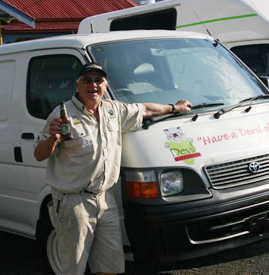
Budget campervan and 4WD hire based in Hobart, Tasmania. Part of a large rental network spanning Australia and New Zealand.

One of Australia's largest budget campervan and 4WD camper hire companies — plain 2WD campervans, iconic Mystery Machines and genuine 4x4s across 11 depots, fro
Click a marker to see which company operates from that location
Most campervan rentals in Hobart cost between $70 and $360 per day, depending on vehicle type, season, and trip length. Here's a practical breakdown of what to expect across the main categories.
Budget campervans are typically 2-berth hi-top or station wagon-style sleepers with a basic kitchen, fixed or fold-out bed, and a battery — but no onboard toilet or shower. Given Tasmania's often-cool and unpredictable weather, a vehicle with solid insulation and a reliable heater is worth prioritising over the very cheapest options. Britz, Mighty Campers, and Apollo all have entry-level options from Hobart. Rates drop further in winter (June–August) and on longer bookings.
Mid-range vehicles are typically 2–4 berth hi-tops or cab-over campervans with a more complete kitchen, better storage, good insulation, and sometimes a portable toilet. This is the most popular bracket for Tasmanian road trips — the extra quality makes a meaningful difference in a cooler climate where you spend more time inside the vehicle. Britz, Apollo, and Mighty Campers offer solid options throughout this range from Hobart.
Fully self-contained 4–6 berth motorhomes with onboard ensuite, full kitchen, and climate control. Maui is the benchmark at the top end of the Hobart market. Full self-containment is particularly useful in Tasmania, where many of the best campsites are in remote national park areas with limited facilities — the ability to be fully self-sufficient for several days gives you access to locations that others can't reach.
Several factors will move your daily rate up or down:
Tasmania is ideally sized for a campervan circuit — almost every major destination is within a few hours of Hobart, and the island rewards the kind of slow, unhurried travel that a motorhome enables. Here are the routes that matter most.
The Freycinet Peninsula is Tasmania's most photographed landscape — the pink granite peaks of the Hazards mountains framing the perfect arc of Wineglass Bay below. Drive north along the Tasman Highway, stopping at Bicheno and the penguin colony before reaching the Freycinet National Park campground. The walk over the saddle to Wineglass Bay takes about 45 minutes each way and is non-negotiable. Extend the trip to include a kayak tour of Coles Bay or a cruise to see dolphins and seals. Two to four days here feels about right.
The Bay of Fires is one of Australia's most spectacular coastal landscapes — a long arc of white sand beaches backed by orange lichen-covered granite boulders and crystal-clear blue water. Drive north past Freycinet to St Helens and then north along the coast through Binalong Bay and the Gardens. Free camping is available in sections of the Bay of Fires Conservation Area — some of the best free camping in Australia. The colours at sunset are extraordinary. Allow three to five days to do justice to both Freycinet and the Bay of Fires in a single northern circuit.
Cradle Mountain is Tasmania's most iconic image — a jagged dolerite peak reflected in the still waters of Dove Lake below. The walk around Dove Lake (2 hours) is one of Australia's finest short walks and suitable for all fitness levels. The Overland Track starts here for those doing the full six-day wilderness walk. Even without the hike, Cradle Mountain is worth two days — the wombats, wallabies, and Tasmanian devils in the area are abundant and easily spotted at dusk. Book the Waldheim campground in advance — it fills fast in peak season.
The Huon Valley is Hobart's immediate hinterland — a lush river valley of apple orchards, salmon farms, and excellent food. Continue south to Geeveston and the Hartz Mountains, or take the short ferry to Bruny Island — a world away in character despite being less than an hour from Hobart. Bruny Island has outstanding wildlife (little penguins, white wallabies, echidnas), great local cheese and oysters, and the Bruny Island Neck — a narrow isthmus connecting the island's two halves with stunning views in both directions. Two nights on Bruny is ideal.
The Tasman Peninsula is one of Tasmania's most dramatic coastal landscapes — sea cliffs that rank among the tallest in the Southern Hemisphere, the iconic Tessellated Pavement, and the Tasman Arch and Devil's Kitchen rock formations. The Port Arthur Historic Site is Australia's most significant convict heritage location and one of the most moving and thoughtfully presented historic sites in the country — allow a full day. Cape Hauy and Cape Pillar are outstanding hiking destinations for those wanting serious cliff-top walking.
A complete Tasmania circuit from Hobart takes in all the highlights: Freycinet, Bay of Fires, and Launceston heading north; then west through Sheffield and Cradle Mountain to Strahan and Queenstown on the wild West Coast; south through the Huon Valley and Bruny Island on the return to Hobart. This is one of the best self-drive circuits in Australia — compact enough to complete in 10 days, rewarding enough to justify two weeks. Many travellers combine it with a ferry crossing from Melbourne to Devonport, completing the circuit before returning to the mainland by sea.
Tasmania's cooler climate, narrower roads, and often-remote camping locations all influence the right vehicle choice. Quality and reliability matter more here than in many mainland cities.
A compact 2-berth campervan is the most popular choice for solo travellers and couples. Tasmania's roads — particularly on the West Coast and in the south-west — are often narrow, with tight corners and passing places. A compact vehicle is significantly easier to manage than a large motorhome in these conditions. Look for a model with good insulation and a reliable gas heater — Tasmania's weather can change quickly even in summer. Britz, Apollo, and Mighty Campers all have strong 2-berth options from Hobart.
For three or four travellers, a hi-top or cab-over 4-berth is the sweet spot. The additional space makes multi-day national park stays much more comfortable, and good insulation keeps everyone warm during Tasmania's cool nights. Be aware that some of the narrower roads in the west and south-west can be challenging in a larger vehicle — drive carefully and use pull-offs generously. Apollo, Britz, and Mighty Campers offer good 4-berth options from Hobart.
A fully self-contained 6-berth motorhome is the best choice for larger families or travellers wanting full self-sufficiency in national park areas. Full self-containment — particularly an onboard toilet and shower — is genuinely valuable in Tasmania, where some of the most spectacular campgrounds (Cradle Mountain, the South West) have limited or no facilities. Maui operates from Hobart at the top end of the market. Note that the largest motorhomes require extra care on Tasmania's narrower roads.
Tasmania's main tourist circuit is entirely on sealed roads — a 4WD is not necessary for Freycinet, Bay of Fires, Cradle Mountain, or the Huon Valley. However, if your itinerary includes remote South West tracks, the Frenchmans Cap approach road, or any serious off-road exploration, check that your vehicle is approved for unsealed roads and rated for the terrain. Most standard campervans are not approved for unsealed roads in Tasmania.
Station wagon-style sleeper campervans are the entry point — functional in summer but often under-insulated for Tasmania's climate, particularly outside the warmest months. If budget is the main driver, a basic hi-top campervan with proper insulation and a gas heater is a much better compromise than a bare station wagon sleeper for a Tasmanian trip.
Hobart's campervan hire depots are located in the northern suburbs — primarily Moonah, Glenorchy, and Rosny Park — within 10–20 minutes of Hobart Airport. Britz, Maui, Apollo, and Mighty Campers all operate from this area, with easy access to the main highways heading north to Launceston or south to Port Arthur. A taxi or Uber from the airport to any depot is straightforward. Your hire company will confirm the exact depot address when you book.
You do not need a special heavy vehicle licence to drive a campervan or motorhome in Australia — a standard car licence is all that's required, even for the largest 6-berth motorhomes. Your licence must be current, unrestricted, and in English. If your licence is not in English you will need either an International Driving Permit or a certified English translation arranged before you arrive.
The standard minimum age across most companies is 21, though some operators will hire to drivers aged 18 and over who hold a full licence. P1 (red P plate) holders are not accepted by any company. Drivers aged 21–24 should expect an additional young driver excess on top of the standard insurance liability.
For summer travel (December–February) and school holidays, book your Hobart campervan hire at least three to four months in advance — Tasmania is extremely popular in peak season and vehicles sell out fast. For shoulder season (March–May and September–November), four to six weeks ahead is generally sufficient. Winter bookings (June–August) can often be made with shorter notice and this is when you'll find the best daily rates. National park campgrounds — particularly Cradle Mountain, Freycinet, and the South West — should be booked well in advance through the Parks and Wildlife Service Tasmania, independent of your campervan booking.
Tasmania's roads are well maintained but often narrow, particularly in the West Coast, South West, and Tasman Peninsula. Take corners slowly, use passing places generously, and be especially careful in larger motorhomes. Speed limits are lower than mainland Australia in many areas — 80km/h on most rural roads. Hobart has no toll roads. Fuel is available in all major towns; fill up before heading into national park areas or the West Coast, where gaps between stations can be significant. Wildlife — wombats, wallabies, Tasmanian devils — are common on roads at night. Drive slowly after dark.
The Spirit of Tasmania sails nightly between Melbourne and Devonport (northern Tasmania), with vehicles including campervans and motorhomes carried on board. The crossing takes approximately 9–10 hours overnight. This is a popular option for travellers wanting to bring their hire vehicle across from the mainland — check with your hire operator in advance about ferry transport, as policies vary. Alternatively, pick up a Hobart vehicle and return it to a Melbourne depot after taking the ferry back.
Campervan hire in Hobart ranges from around $70 per day for a basic budget campervan up to $360 per day or more for a fully self-contained luxury motorhome. The price depends on vehicle type, fleet age, time of year, and rental length. Summer (December–February) is peak season with the highest prices. Winter (June–August) offers the lowest rates. Bookings of 14 days or more typically attract better daily rates — a natural fit for a full Tasmania circuit.
Hobart's campervan depots are in the northern suburbs — Moonah, Glenorchy, and Rosny Park — within 10–20 minutes of Hobart Airport. Britz, Maui, Apollo, and Mighty Campers all operate from this area. A taxi or Uber from the terminal is the most practical transfer. Your hire company will confirm the exact depot address at booking.
No. A standard car driving licence is all you need to drive any campervan or motorhome in Australia, including the largest 6-berth models. No heavy vehicle licence is required. Your licence must be current, unrestricted, and in English — if it is not in English, you will need an International Driving Permit or a certified English translation arranged before you arrive.
The standard minimum age is 21 across most campervan hire companies in Hobart. Some operators will hire to drivers aged 18 and over who hold a full unrestricted licence. P1 (red P plate) holders are not accepted by any company. Drivers between 21 and 24 should expect an additional young driver excess on top of the standard insurance bond.
Policies vary between operators. Some allow hire vehicles on the Spirit of Tasmania; others do not. You must confirm this with your specific hire company before booking — do not assume it is permitted. If ferry transport is approved, you will need to book the ferry crossing separately through TT-Line. The crossing runs nightly between Melbourne and Devonport and takes approximately 9–10 hours.
Most Hobart campervan rentals include unlimited kilometres, basic kitchen equipment (gas cooktop, fridge, pots and pans, cutlery), bedding and linen, a battery system, and roadside assistance cover. Insurance with a standard excess is typically included in the base rate, with the option to purchase a reduced excess at pick-up. What is generally not included: airport transfers, additional driver fees, fuel, campsite fees, and optional extras like GPS, camp chairs, or portable Wi-Fi.
Summer (December–February) offers the longest days, warmest temperatures, and the best conditions for hiking and beach activities — but prices are highest and campgrounds fill fast. Spring (September–November) and autumn (March–May) are excellent shoulder seasons with good weather, reasonable prices, and fewer crowds. Winter (June–August) is cold but uniquely rewarding — snow on Cradle Mountain, potential aurora australis sightings, and the lowest daily rates of the year.
A full circuit of Tasmania from Hobart — taking in Freycinet, Bay of Fires, Launceston, Cradle Mountain, Strahan, the West Coast, and the Huon Valley on the return — takes a minimum of 10 days but is much better with 14. Most travellers either do the full circuit in two weeks or focus on a specific region (East Coast, North West, South) in a shorter 5–7 day rental. Tasmania rewards slow travel more than most destinations — resist the temptation to rush.
Yes — Tasmania has outstanding free camping options. The Bay of Fires Conservation Area has designated free camping spots on some of the finest beaches in Australia. Many state forest areas and some national park zones permit free camping with a valid Parks pass. The Discover Tasmania website and WikiCamps are the best tools for finding free sites. Note that many of the most popular national park campgrounds — Cradle Mountain, Freycinet — are paid sites that must be booked in advance through the Parks and Wildlife Service Tasmania.
For summer travel (December–February) and school holidays, book three to four months in advance. Tasmania's small fleet size relative to demand means popular vehicles sell out faster than in mainland cities. For shoulder season travel in spring or autumn, four to six weeks ahead is generally sufficient. Winter bookings can often be made with shorter notice.
Yes — for the most popular sites, absolutely. Cradle Mountain's Waldheim campground and Freycinet's Friendly Beaches sites fill weeks ahead in peak season. All national park campgrounds in Tasmania are booked through the Parks and Wildlife Service Tasmania website. A national parks pass is required for entry to all national parks and is excellent value for a longer trip — purchase it before you arrive.


