A company-by-company breakdown of who covers what, what still leaves you exposed, and why a $10-a-day third-party policy can outperform a $78-a-day premium pack.
Let's Get One Thing Straight First
Every campervan hire in Australia includes what the industry calls "standard insurance" or the "basic liability option." It's automatically included in your daily rental rate — you don't pay extra for it.
Here's what that actually means:
Third-party personal injury cover (known as Compulsory Third Party, or CTP) is included because it's legally required. Full stop. That's someone else's broken body if you cause an accident. That's it.
The vehicle itself? Damage to the van? Damage to the other car? All on you. Up to several thousand dollars. Sitting there on your credit card for weeks.
Every company in this article works the same way. They wrap it in different language — "The Low Road," "Bronze Package," "Standard Liability" — but the base position is identical: you are personally liable for significant damage, regardless of fault.
What you're actually buying when you upgrade your insurance is called a Liability Reduction Option (LRO). You're not really buying insurance in the traditional sense — you're buying the company's agreement to cap how much of the repair bill they'll come after you for.
That distinction matters a lot. Keep reading.
The Big Players, Compared
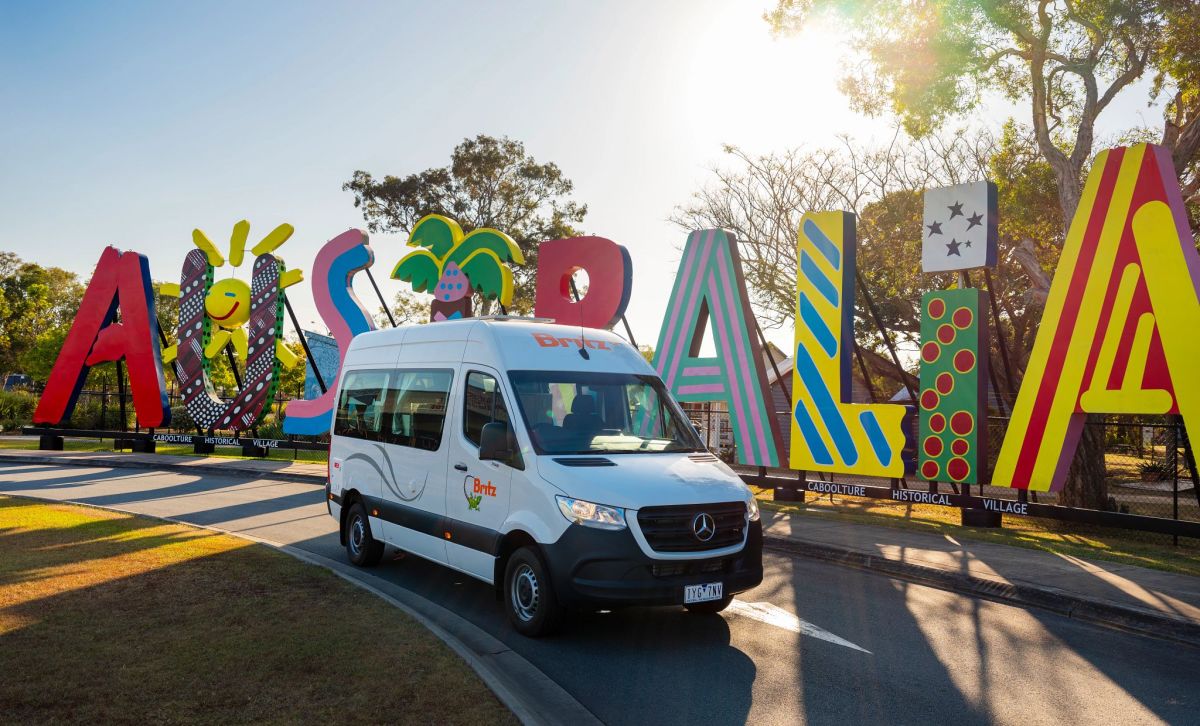
Britz (thl Group)
Britz calls their three tiers The Low Road, The High Road, and the Value Pack.
The Low Road (included in daily rate): You're liable for between $5,000 and $7,500 depending on the vehicle — $5,000 for the smaller HiTop and Voyager, $7,500 for most other 2WDs, $8,000 for 4WD. That full amount is debited from your credit card at pickup. Not pre-authorised. Actually debited.
The High Road ($50/day): Liability reduced to $0. Covers front, back, side panel and awning damage, plus towing and recovery. Sounds good. But notice what's NOT in there yet — windscreens, tyres, overhead damage, underbody damage.
The Value Pack ($60/day): This is the one that includes all of the above PLUS unlimited windscreen and tyre cover, overhead and underbody accidental damage, single vehicle rollover, portable fan/heater, camp table and chairs, child/booster seats (on request), linen exchange service, and toilet chemicals.
For 4WD hires, Britz caps the insurance charge at 50 days maximum — so longer trips get the rest of the rental covered for free once you hit that cap.
The Refuelling Pack ($209 per rental) and Cleaning Pack ($99 per rental) are separate add-ons entirely, letting you return the van empty and dirty respectively. Nothing to do with damage cover.
What's excluded even on the Value Pack? The terms are clear: any damage caused by wilful misconduct, driving under the influence, negligence resulting in damage, breaching road restrictions. Personal belongings are never covered. Wrong fuel? You're fully liable regardless of any pack you've bought.
Apollo (also thl Group)
Apollo and Britz are siblings — both owned by Tourism Holdings Limited — and their insurance structures are nearly identical. Different branding, same DNA.
Apollo uses the same naming: The Low Road, The Middle Road, The High Road, and the Value Pack.
The Low Road (included): Standard liability of $5,000 for campervans, $7,500 for motorhomes and 4WDs. Full amount debited at pickup.
The Middle Road (~$38/day): Reduces liability to $2,500. Bond reduced to $2,500 accordingly.
The High Road (~$45/day): Liability reduced to $0. Bond drops to a credit card imprint of $250–$500 rather than an actual debit. Includes towing and recovery from permitted roads.
The Value Pack (~$60/day): The High Road plus unlimited windscreen and tyres, accidental overhead and underbody damage, toilet chemicals, camp chairs and table, baby/booster seats on request. Capped at 50 days maximum charge.
Apollo-specific to know: Apollo's liability is charged at the time the accident is reported — not at the end of the rental. So if you have an accident on Day 3 of a 14-day trip, that money leaves your card immediately.
What's excluded even at the top tier? Same as Britz: wilful misconduct, DUI, unauthorised drivers, wrong fuel, personal belongings. For 4WD hires, coverage does not extend to roads where Apollo has not granted permission to travel — and getting bogged off-road costs you the full towing and recovery bill regardless of which pack you've bought.
JUCY
JUCY run a more compact fleet of smaller, budget-friendly vehicles. Their structure is familiar.
Standard Liability (included): $5,000–$7,500 depending on vehicle. Full bond debited at pickup.
Liability Reduction (~$30/day): Reduces liability to $2,500.
Stress Free (~$45–$50/day, capped at 14 days): Liability reduced to $0. Includes tyre and windscreen damage cover. For JUCY's rooftop pod vehicles, if you don't take Stress Free Plus, roof damage or a single vehicle rollover attracts a charge of up to $5,000 regardless of any other cover you hold.
Stress Free Plus: Includes rollover cover and roof/pod damage in addition to the base Stress Free.
JUCY is unusually explicit in their T&Cs. The following are ALWAYS the hirer's responsibility, regardless of what you've paid for: getting bogged, lost or locked-in keys, wilful misconduct, DUI or drug-affected driving, breaching any road use restriction, and personal belongings.
There's also a $75 claims administration fee charged on top of any excess amount. JUCY's bond release is one of the faster ones in the industry — they aim to release within 7 days of pickup or 48 hours of drop-off, which is actually better than most.
Camperman Australia
Camperman is a Brisbane-based independent — not part of the thl group — and their approach to insurance is refreshingly different from the big players.
Here's the standout difference: Camperman includes comprehensive insurance in the standard rental price, with a flat $500 excess.
No tiered upsell. No choosing between Low Road and High Road. $500 bond, taken as a credit card hold at pickup. That $500 covers all accidents — single vehicle, multi-vehicle, you name it.
Camperman also offers a separate Tyre and Windscreen Insurance add-on. Without it, all tyre and windscreen costs are your responsibility.
What's excluded from Camperman's insurance? Camperman operates mostly in Queensland, NSW, and Victoria. Certain models are restricted to those states — if you drive outside the permitted zone, all cover is void. Overhead and underbody damage is explicitly NOT covered under standard insurance. Damage from failing to follow height restrictions voids cover entirely.
The $500 excess and no-tiered-upsell model does make Camperman a genuinely different proposition for budget-conscious hirers. You just need to accept the overhead/underbody exclusion and stay in permitted states.
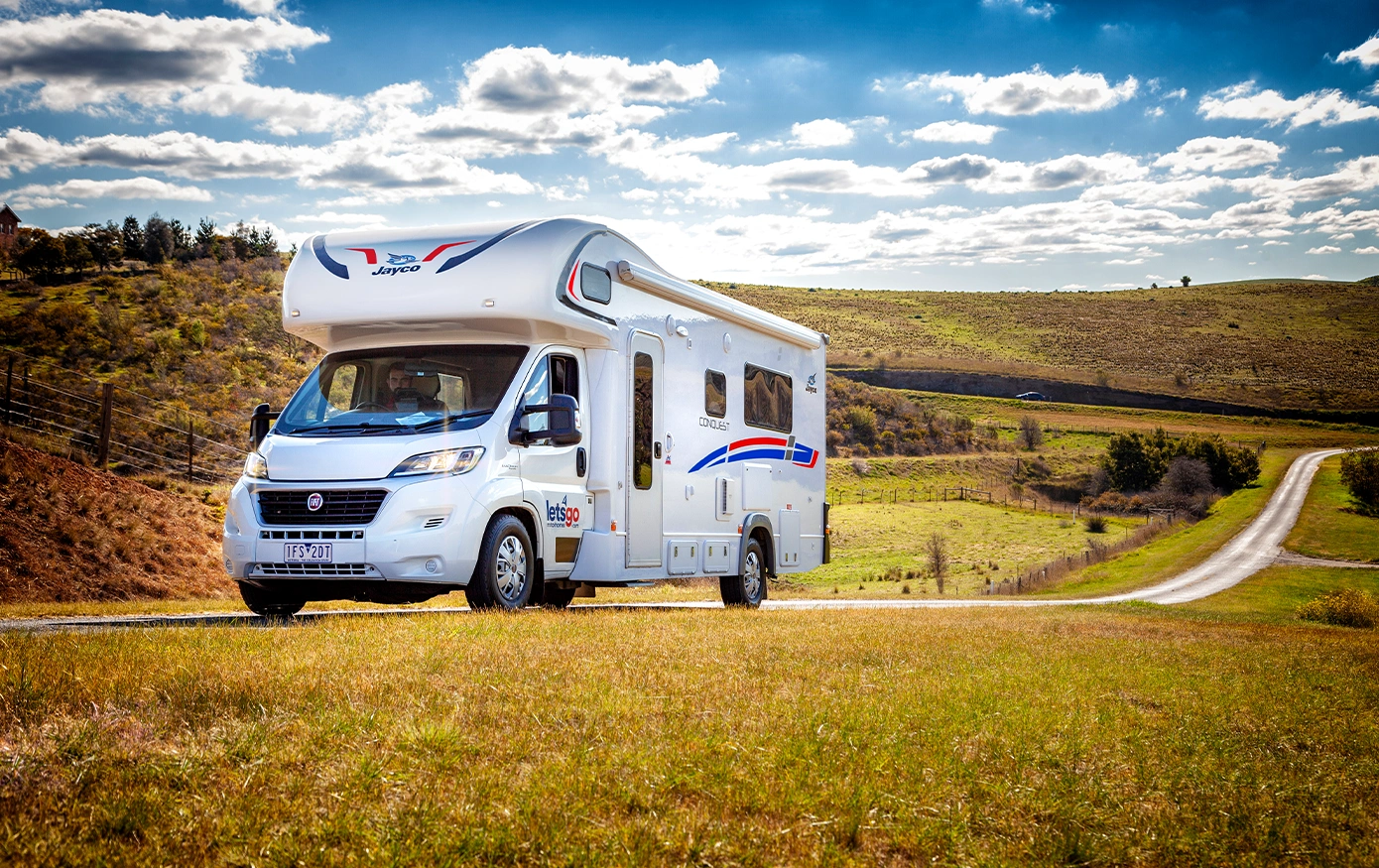
Let's Go Motorhomes
Let's Go operates a premium fleet of Jayco-built motorhomes and campervans. Their insurance structure is the most tiered of any company reviewed here — five levels.
Bronze Package (included): Maximum liability $5,000. No windscreen, tyre, overhead, underbody, awning or window cover.
Silver Package ($30/day): Liability reduced to $2,500. Windscreen, tyres, overhead, underbody and awning still excluded.
Platinum Package ($68/day): Liability reduced to $750. Includes one tyre replacement. Covers single vehicle rollover. Overhead and underbody still NOT covered.
Platinum Plus Package ($78/day, not available on rentals of 7–9 days): Liability reduced to $350. One tyre replacement. Single vehicle rollover covered. Windscreen can be added for an extra $25/day. Overhead and underbody still not covered even at this top tier. Awning damage excluded.
That last point is worth sitting with. You can pay $78 a day for the best insurance Let's Go offers, and if you clip a tree branch and crack the overhead fibreglass — one of the most common campervan accidents in Australian campgrounds — you are still personally liable for the full repair cost.
Additional exclusions: immersion in water, getting bogged by driver error, wrong fuel, awning damage from user negligence (replacement up to $3,000 on you), the Royale slide-out bed if damaged by incorrect operation ($2,500), and blinds in 6-berth Royales.
So What Does NOBODY Cover?
Across every company reviewed, here is the list of things that are excluded from insurance cover regardless of which tier you pay for:
Personal belongings. Your laptop, camera, luggage, passport — none of it is covered if the van is broken into or stolen.
Wrong fuel. Put diesel in a petrol engine or petrol in a diesel engine and you will pay every single cent of the repair. No exceptions. No arguments.
Driving under the influence. All cover immediately voided. You bear full liability.
Unauthorised drivers. Anyone not listed on the rental agreement driving the vehicle voids all cover for everyone — including the listed driver.
Getting bogged off-road. Towing and recovery costs are your responsibility across all operators if the vehicle is bogged by driver error, particularly off unsealed roads.
Damage from road restriction breaches. Driving on beaches, flooded roads, off-road areas, or outside of permitted geographic zones voids all cover.
Demurrage (loss of use). This one trips people up. When the rental company is repairing your damaged van, they can't hire it out to another customer. They charge you for those lost hire days on top of the repair bill. This is capped by your liability amount, but it's included in what your excess covers — so even if the actual damage is $2,000, the total claim including demurrage could hit your full bond amount.
Enter RentalCover: The Third-Party Alternative
RentalCover.com is the third-party insurance option recommended for years on this site. They're based in Australia, they specialise in rental vehicle excess cover, and their policy is worth understanding properly.
Here's how it works in practice: You do NOT take any additional insurance with the campervan rental company at the pick-up counter. You accept the full standard liability — meaning you put down the full bond (say, $7,500) on your credit card. RentalCover doesn't reduce that bond. What RentalCover does is reimburse you for whatever the rental company actually deducts from your bond after an incident.
What does RentalCover cover that the rental company often doesn't?
- Tyres and windscreen damage — covered
- Overhead and underbody damage — covered
- Awning and tent damage — covered
- Towing and recovery costs — covered
- Loss of use (demurrage) fees — covered
- Administration fees — covered
- Personal baggage — up to $2,000 included
- Personal electronics — up to $1,000 included
- All authorised drivers on the rental agreement — covered
The coverage amount sits between $4,000 and $8,000 depending on the policy selected. The price difference is significant: RentalCover's policies for campervans in Australia typically run $6–$10 per day — compared to $45–$78 per day for the rental company's top tier.
The Big Catch With Third-Party Insurance
RentalCover's model is a reimbursement model. That means: (1) the rental company takes your money first, (2) you make a claim, (3) RentalCover pays you back.
This requires you to be able to cash-flow the full bond amount — up to $7,500 — for the entire duration of your rental, plus however long it takes after return for the rental company to finalise their damage assessment. That can be weeks.
If you're travelling with $10,000 on your credit card and won't miss $7,500 for a month, this is a great deal. If your credit card has a $5,000 limit and you need it for the trip, you physically cannot put down the full bond without additional insurance from the rental company.
Advantages of Third-Party Insurance (RentalCover)
Broader coverage. Overhead damage, tyres, windscreens, awnings, personal baggage and electronics — covered under a single policy at prices the rental companies can't match.
Simpler across multiple vehicles. If you're doing a multi-leg trip with different companies, one RentalCover policy covers you. You're not buying insurance from Apollo on week one and Britz on week two.
No upsell pressure at the counter. You arrive knowing you're covered. The counter staff can offer all three tiers and you can politely decline all of them.
Better for long trips. The rental companies cap their LRO charge at 40–50 days. RentalCover also offers policies up to 12 months, which works for extended van trips without the cap creating a cliff on day 51.
Covers what rental companies explicitly exclude. Demurrage, admin fees, personal belongings — all included.
Disadvantages of Third-Party Insurance
You still pay the full bond upfront. There's no way around this. The rental company doesn't care about your RentalCover policy at the counter. They want their bond.
Claims require documentation. You need to file a claim with RentalCover and provide the rental company's damage assessment and payment confirmation. If the rental company is slow to finalise, your reimbursement is delayed.
The bond can sit locked for weeks. Your $7,500 can be stuck with the rental company for 2–6 weeks depending on how quickly they process the damage claim.
It doesn't reduce the bond amount. If the point for you is minimising the cash you need available at pickup, third-party insurance doesn't help with that. It minimises total cost and broadens coverage, but it doesn't reduce the upfront cash requirement.
How To Think About Which Option To Choose
If you genuinely cannot cash-flow the full bond: Take at minimum a mid-tier option from the rental company to reduce the bond to a manageable amount. The cost is worth the cash-flow relief.
If you can afford the full bond and want the best coverage: Consider RentalCover or a comparable third-party insurer. Your total coverage is broader, your daily cost is lower, and you're covered for the things most likely to catch you out (windscreens, tyres, overhead damage from campground trees).
If you're hiring from Camperman: Their $500 excess and inclusive model is already competitive. Add the tyre and windscreen add-on if you want complete peace of mind. Consider a third-party policy only for the items Camperman won't cover (overhead/underbody, personal belongings).
If you're going off-road in a 4WD: The rental company's own 4WD additional cover is worth evaluating carefully, as third-party policies may have restrictions on unsealed road coverage. Read your policy carefully before heading onto corrugated tracks.
Regardless of what you choose: Read the exclusions clause. Every single one of the companies reviewed here has situations where all cover — even the premium tier — is completely voided. Unauthorised drivers, wrong fuel, breaching road restrictions: these aren't edge cases. They're situations people genuinely end up in.
The Bottom Line
Every operator covered here uses fundamentally the same model. They provide mandatory CTP cover for free, hold your bond against potential damage, and offer you a daily upsell to reduce your liability.
The differences are:
- Bond amount: $500 at Camperman, up to $7,500–$8,000 at the big thl brands
- What the top tier actually covers: Let's Go and Camperman both exclude overhead/underbody even at the top end; Britz and Apollo's Value Pack includes it
- Pricing of top-tier cover: $50–$78/day across all operators
- How quickly you get the bond back: JUCY is fastest (7 days), most others take 2–4 weeks, anecdotally longer
Third-party insurers like RentalCover offer genuinely broader coverage at a materially lower daily rate, but require you to have the full bond available and be comfortable with a reimbursement-based claims process.
Neither option is universally better. Both have a scenario where they're the right call.
What is universally true is that the base "standard included insurance" leaves you meaningfully exposed — and understanding exactly what you're exposed to before you get to the pick-up counter is the whole point of this article.
Don't skim the exclusions clause. That's where the real story lives.
By Tim Ahern
Related: Campervan Hire Insurance in Australia: Explained and Exposed — the original deep-dive on bonds, excess reduction, and how the whole system works.